
Who does what on site?
Client, administrator, designer, site direction, safety, contractor, project management – and after the works, technical maintenance with the 1·3·10 warranties.

When the rain gets in
Horizontal and vertical waterproofing: why after about thirty years the rain gets into the building, how open joints must stay covered during the works – and who gives the instruction.

Why the concrete crumbles (part 1)
Carbonation and chlorides by the sea: why the steel inside the concrete rusts and why painting over it solves nothing.

How to do it right (part 2)
Six steps of repair to EN 1504: diagnosis, removal, reinforcement, mortar, protection, verification.

Suspected asbestos – what now?
Test, plan, specialist firm, dispose: the mandatory procedure before anyone touches a single sheet.
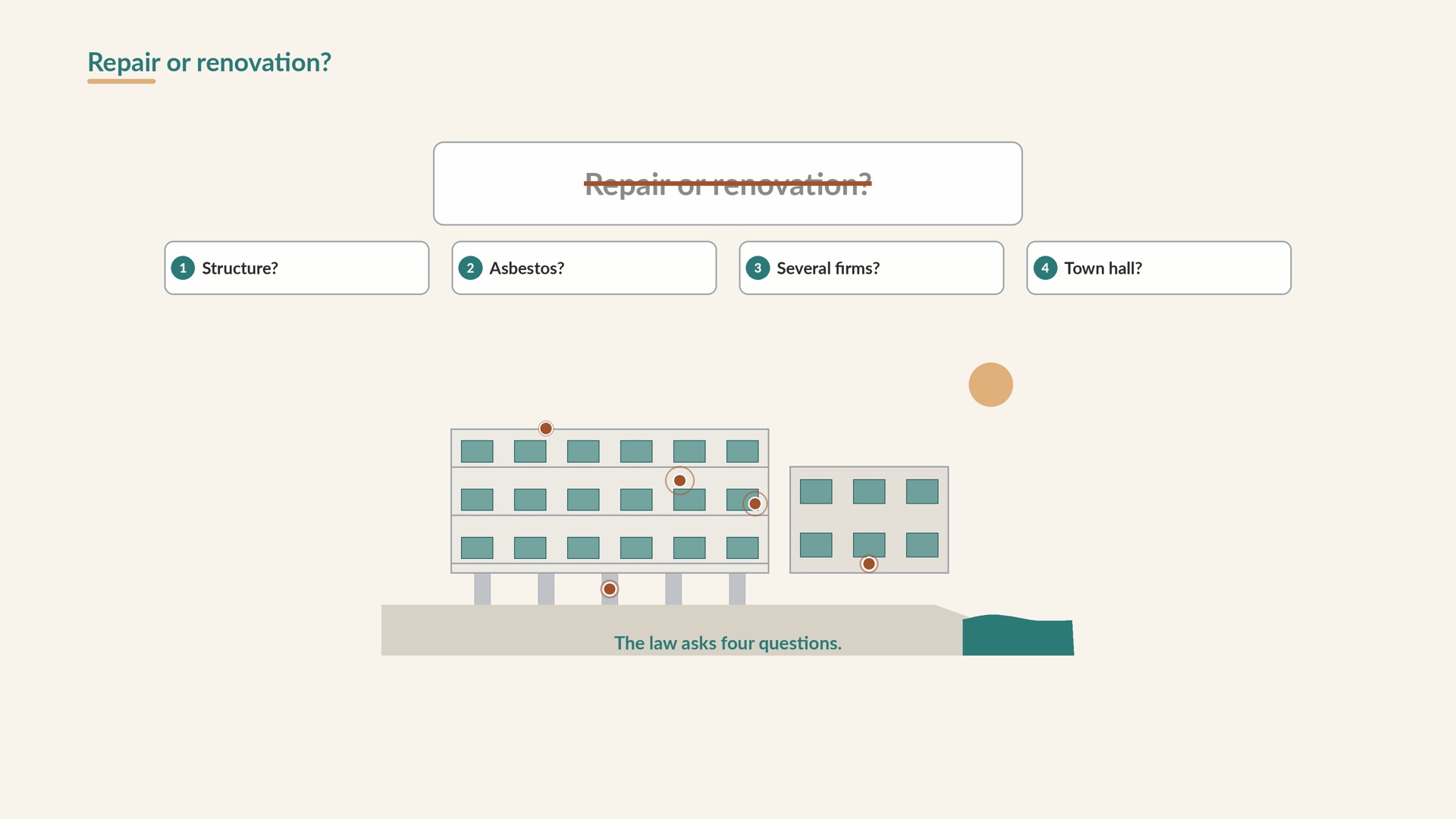
Repair or renovation?
Repair or renovation? The law asks four questions – structure, asbestos, several companies, town hall – and from them follow three tracks: protect at once, repair promptly, renovate thoroughly.
Who keeps the renovation on track?
What project management does, what it does not do and how an owners' association appoints it.

Reporting damage, step by step
Water damage in a flat in a Spanish owners' association: eight steps, five demands, two deadlines – and a free form that prepares the notification to the administrator.

From decision to site – how repairs work in an owners' association
Twelve steps, three resolutions: how an owners' association in Spain – including what is specific to the Canary Islands – gets from the first survey to the formal start of works. For each step you see what is required, what the standards say and what good practice is. At the end: ten questions for your association, with a checklist to download.
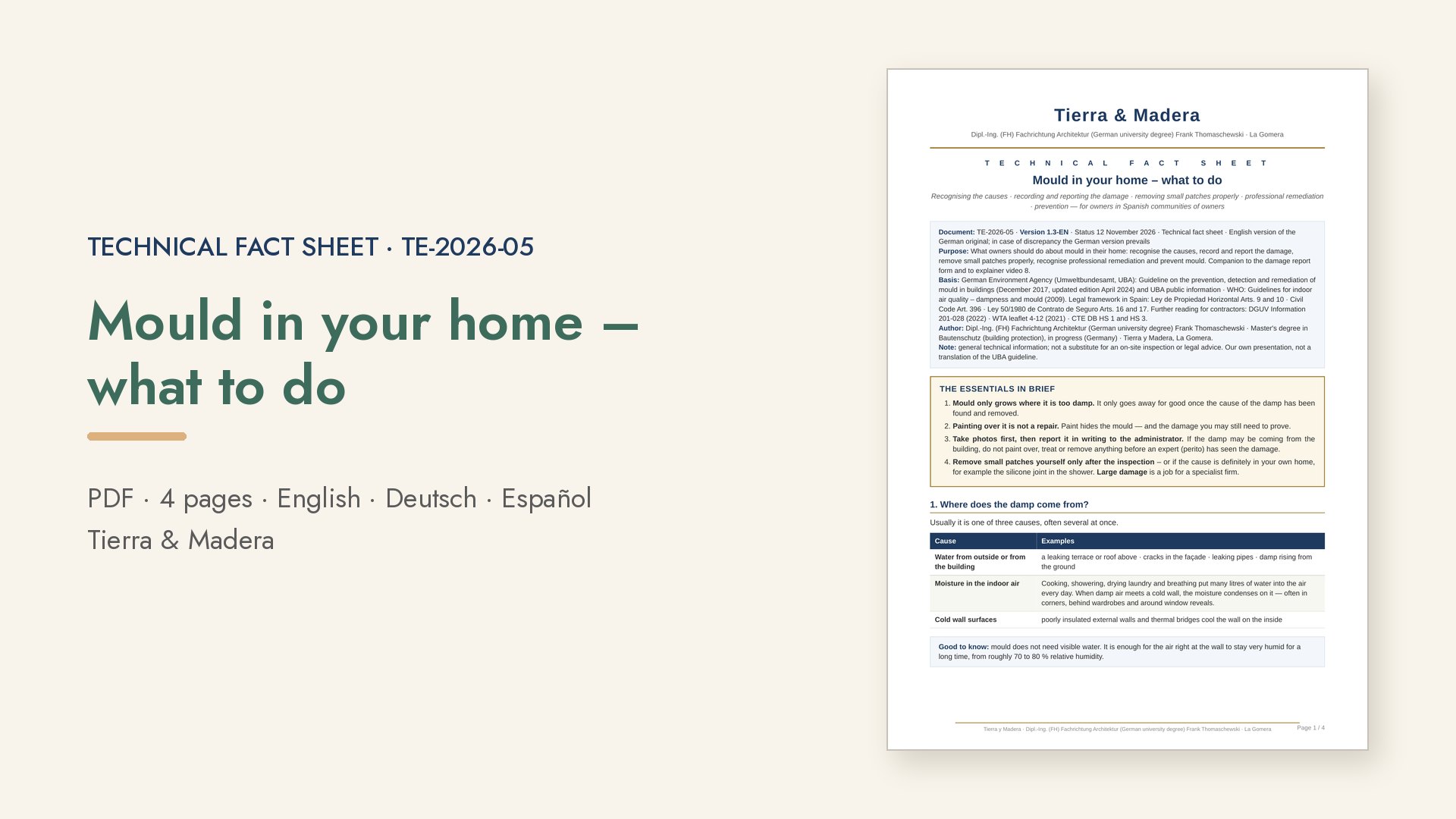
Mould in your home – what to do
Recognising the causes · recording and reporting the damage · removing small patches properly · professional remediation · prevention — for owners in Spanish communities of owners